
Altitude sickness on the Everest Base Camp trek: sleeping altitudes and acclimatisation days
Above Namche Bazaar, the main risk on the Everest Base Camp trek is altitude sickness. Between day two and day nine your sleeping altitude rises from 2,800 m to 5,160 m, and a typical program sets aside two days for acclimatisation, in Namche at 3,440 m and in Periche at 4,240 m. You sleep above 4,000 m for five nights in a row.
Sources checked 29 November 2026.
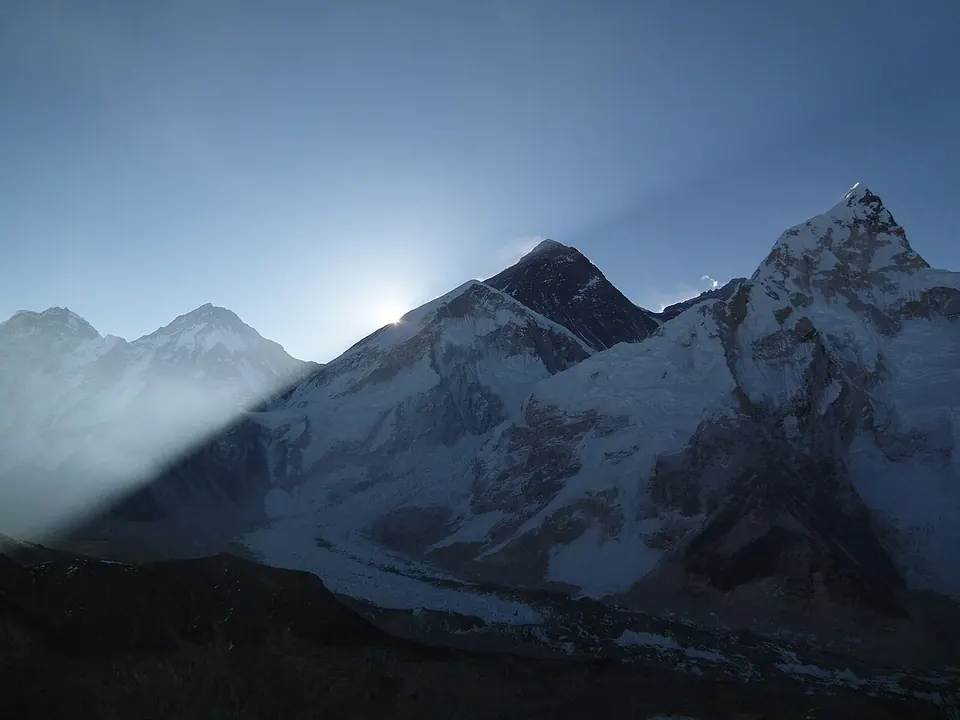
How high do you sleep on the Everest Base Camp trek?
The stages and altitudes come from Wikivoyage. We put together the flight days and the split of the descent from the way operators usually build the program, so the day numbers are approximate. No source confirms the altitude of Lukla or of the nights on the way down.
| Day | Night | Sleeping altitude | During the day |
|---|---|---|---|
| 1 | Lukla | about 2,860 m, unconfirmed | flight from Kathmandu, about 25 minutes |
| 2 | Monjo | 2,800 m | 6 to 6.5 h on foot |
| 3 | Namche Bazaar | 3,440 m | 3 to 4 h |
| 4 | Namche Bazaar | 3,440 m | acclimatisation, a walk to Khumjung at 3,790 m or Thame at 3,800 m |
| 5 | Tengboche | 3,870 m | 5 to 6 h |
| 6 | Periche | 4,240 m | 5 to 6 h |
| 7 | Periche | 4,240 m | acclimatisation |
| 8 | Lobuche | 4,930 m | 4 to 6 h |
| 9 | Gorak Shep | 5,160 m | the base camp at 5,380 m, 2 to 3 h more |
| 10 | Lobuche or Periche | 4,930 or 4,240 m | sunrise on Kala Patthar, 5,643 m |
| 11 to 13 | Namche · Lukla | unconfirmed | the descent |
| 14 | Kathmandu | n/a | flight from Lukla |
Which day has the biggest jump in sleeping altitude?
Day eight. From Periche to Lobuche your sleeping altitude goes up by almost 700 m, from 4,240 m to 4,930 m. The walk is short, about 8 km, and takes 4 to 6 hours. The next night, at Gorak Shep, you sleep another 230 m higher, and those two nights are the highest of the trek.
The second biggest rise comes on day three. From Monjo to Namche the sleeping altitude goes up 640 m, and the next day the group stays in Namche. Between Namche and Periche it grows more slowly, by 370 to 430 m a day. You sleep above 4,000 m from day six to day ten, two nights in Periche, one each in Lobuche and Gorak Shep, and one more on the way down.
How far above your sleeping altitude do you go during the day?
Technically it is a trail. You need no rope, crampons or ice axe, and you walk 3 to 6 hours a day. The altitude is what makes it hard, and three times on the trek the day takes you higher than where you sleep.
On the acclimatisation day in Namche the group walks up to Khumjung or Thame, 350 to 360 m above the lodge, and comes back to sleep at 3,440 m. On day nine it is 2 to 3 hours more from Gorak Shep to the base camp at 5,380 m, and you sleep 220 m lower, at Gorak Shep.
On day ten you set out before dawn for Kala Patthar, 5,643 m. It is the highest point of the trek, almost 500 m above the last night. The descent starts the same day, and the night in Lobuche or Periche is 230 to 920 m lower than at Gorak Shep.
How many acclimatisation days does the trek include?
A typical program has two. On day four the group spends a second night in Namche, and during the day walks light up to Khumjung or Thame and comes back. On day seven you spend a second night in Periche.
Wikivoyage says you can reach the base camp in 8 to 10 days. For the whole trip from Kathmandu and back it suggests 12 to 14 days, or 14 to 16 at a slower pace. Operators sell 12, 14 and 16 day programs, and the 16 day ones add extra acclimatisation days.
None of these sources can tell you how altitude will affect you in particular. Ask a doctor about that before the trip.
Why do you need spare days?
The trek schedule depends on the plane. In the monsoon, flights out of Lukla are delayed, sometimes by a week. In 2024 most flights to Lukla left from Manthali, a 3 to 4 hour drive from Kathmandu with a 03:00 to 04:00 start. The other options are a flight to Phaplu or walking in from Jiri, which Wikivoyage says takes longer.
If your flight out of Nepal leaves no slack, a delay has to come out of the days in the mountains. So book that flight with a few spare days, and the acclimatisation days stay in the program.
Operators mostly schedule this trek in March to May and October to November. In winter the lodges above Tengboche are often closed, and the open ones are very cold.
What should you do if you feel unwell at altitude?
The sources behind this article describe only the schedule, with acclimatisation days built into most programs. They do not cover the symptoms of altitude sickness or how to treat it, so we give no medical advice here.
Before the trip, talk to a doctor about going up to 5,643 m and about any medicines you take or want to bring. On the trail, tell the guide straight away if you start to feel different.
How the guide keeps track of the group, and what happens if someone cannot go higher, we will describe once we have confirmed it with the guides.
How we run it
We walk with a licensed guide, as the Nepal Tourism Board rule of 31 March 2023 requires. This is a trek. We go up Kala Patthar on a trail, and we do not climb the nearby peak Pokalde, 5,806 m.
The program has two days with no gain in sleeping altitude, in Namche and in Periche. If you want to shorten it by cutting those days, it is not the right trip for you. We settle the split of the three descent days with the guide, and we send the exact program in Telegram.
Programs on this topic
All programs in the regionAsk us about your trip
Message usA person from the club replies. Questions are free and commit you to nothing.
Where the figures come from
- Wikivoyage: Everest Base Camp Trek stages, sleeping altitudes, walking times, trek length, the Lukla flight, lodges in winter
- Nepal Tourism Board: TIMS card the licensed-guide rule of 31 March 2023
- TourRadar: Everest Base Camp, 14 days how operators build a 14 day program